
Small Business HR Consulting: What Should You Handle In-House?
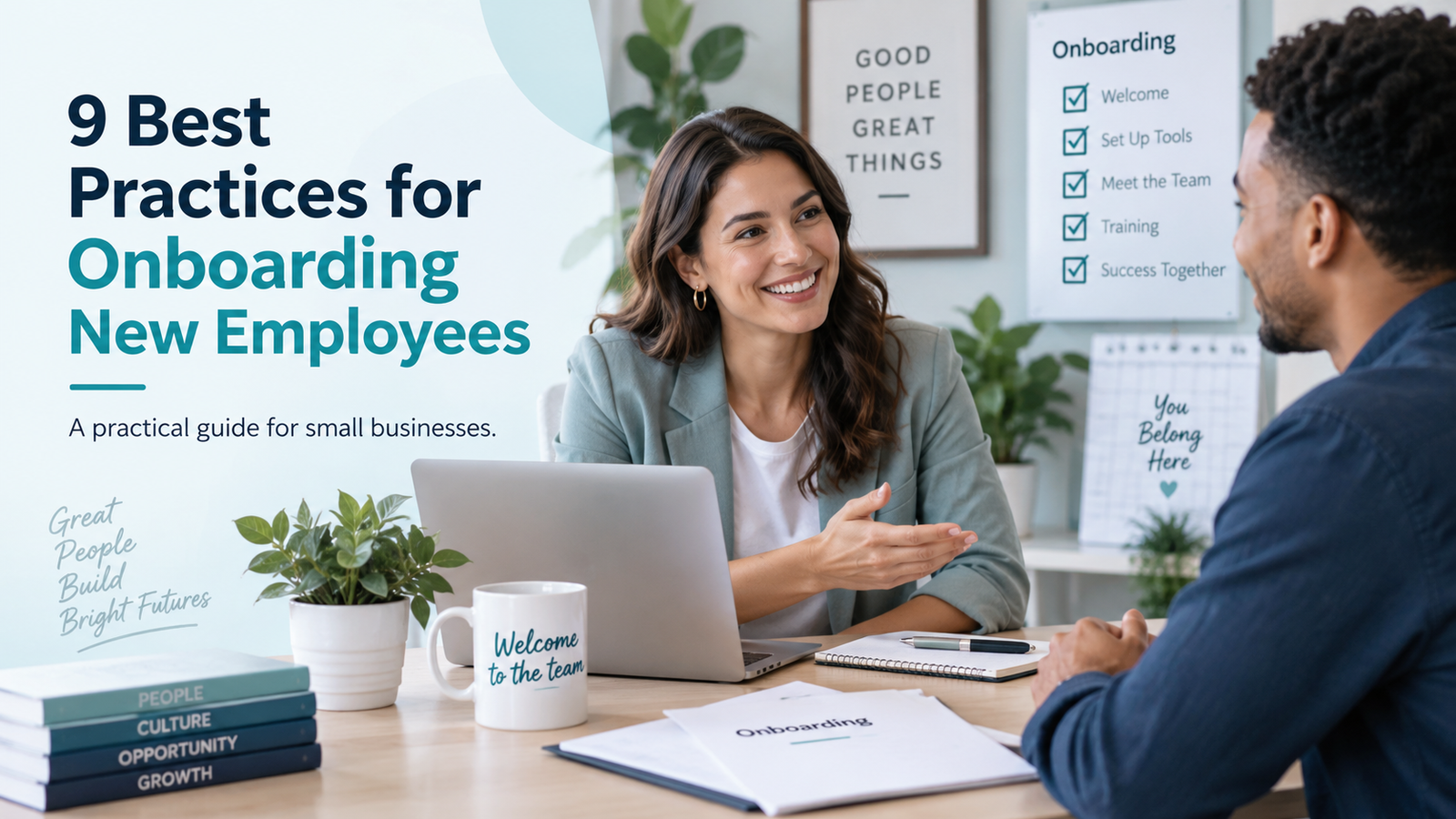
There’s a difference between getting someone hired and actually getting them settled.A new employee can have their paperwork completed, a laptop waiting on their desk, and a calendar full of meetings and still spend their first few weeks wondering what they’re supposed to be doing.
That’s because onboarding isn’t really about getting through a list of administrative tasks. It’s about helping someone understand where they fit, what’s expected of them, how the business works, and where to go when they have questions.
For a small business, this matters even more. There may not be an HR team or a dedicated person whose only job is making sure every new hire has a smooth start. Without a clear process, onboarding can easily become something that gets pieced together between everything else that needs to get done.Here are nine practices that can make the experience better for everyone.
Start Before They Start
The first day shouldn’t be the first time your new employee hears from you.
There are a few simple things that can make someone feel prepared before they arrive: sending the schedule, making sure they know where to go, getting their equipment and accounts ready, and letting them know what to expect.
It also gives the business a chance to catch small problems before they become awkward first-day experiences.
Imagine arriving at a new job only to find out your email hasn’t been set up, nobody knows who is supposed to meet you, and your manager is in back-to-back meetings all morning.
It happens more often than it should.
A little preparation goes a long way.
Give Them Context, Not Just Information
New employees are usually given plenty of information. What they often don’t get enough of is context.
They may learn which software to use, where to find certain documents, or how to submit an expense. But they also need to understand why things are done that way.
How does their role contribute to the business? Who relies on their work? What does the company care about? How are decisions typically made?
Those answers help someone move from simply following instructions to understanding how they fit into the organization.
A useful question to ask:
“What do I wish someone had explained to me when I first started here?”
The answers can reveal the things that experienced employees take for granted but new employees have no way of knowing.

Make the Role Clear
A job description tells someone what they were hired to do. It doesn’t always tell them what success looks like.
During onboarding, talk about priorities, responsibilities, decision-making, and expectations.
What should they focus on first? What can they make decisions about themselves? When should they ask for help? How will their work be evaluated?
This doesn’t mean handing someone a giant list of expectations on their first morning. Start with what matters most.
For example, instead of saying, “You’ll eventually manage these five areas,” give them two or three priorities for their first month.
Clarity creates confidence.
Give Them a Person to Go To
One of the hardest parts of being new is not knowing what you don’t know.
A new employee may hesitate to ask a manager every small question, especially when they’re still trying to make a good impression. Having a designated person they can go to for everyday questions can make the transition much easier.
That person doesn’t need to be an official mentor. They might simply be a teammate who knows the systems, understands how things work, and can answer questions like, “Where do I find that?” or “Who usually handles this?”
Those small interactions often make someone feel comfortable much faster.
Don’t Turn Onboarding Into Information Overload
There is a lot you could tell a new employee.
You could spend hours going through every policy, every tool, every process, and every piece of company history.
That doesn’t mean you should.
People don’t absorb information particularly well when they’re trying to remember a dozen new names, learn unfamiliar systems, and figure out where the bathroom is at the same time.
Think in stages.
What do they need on day one? What will help during their first week? What can wait until they’ve actually encountered the situation?
A good employee onboarding checklist for small businesses can help organize those details without expecting someone to learn everything at once.

Build a Process People Can Actually Follow
A good small business employee onboarding process doesn’t have to be complicated.
In fact, the best ones are often fairly simple.
There should be a clear sequence of what happens before someone starts, during their first day, throughout their first week, and during their first few months.
That might include:
Completing required paperwork
Setting up equipment and accounts
Meeting key team members
Reviewing company policies
Learning role-specific processes
Setting initial goals
Scheduling regular check-ins
The important thing is that the process exists somewhere other than someone’s memory.
If onboarding looks completely different every time someone joins the team, that’s usually a sign that it’s time to document what works.
Don’t Forget the Human Side
It’s easy to focus so heavily on paperwork and processes that the actual person gets lost in them.
Starting a new job can be exciting, but it can also be uncomfortable. There are new people to meet, new expectations to understand, and a lot of uncertainty.
Make space for the human side of the experience.
Introduce the new employee to people beyond their immediate team. Explain the informal things that aren’t written in a handbook. Check in with them without waiting for them to raise a problem.
And don’t assume that because someone isn’t asking questions, everything is going well.
Sometimes people are still figuring out which questions are safe to ask.
Check In Before There’s a Problem
Onboarding shouldn’t disappear after the first week.
Regular check-ins during the first 30, 60, and 90 days give both the employee and manager an opportunity to talk about what’s working and what isn’t.
Ask things like:
What feels clear?
What still feels confusing?
Is there anything you expected to have learned by now but haven’t?
What would make your job easier?
These conversations can also help you figure out how to improve employee onboarding for small businesses because your newest employees can often see gaps that everyone else has learned to work around.
Treat Onboarding as Something You Can Improve
Your onboarding process doesn’t have to be perfect the first time.
Pay attention to what new employees repeatedly ask about. Notice where managers get stuck. Look for steps that are consistently forgotten or delayed.
Then change the process.
Maybe the first-week schedule is too packed. Maybe new hires need more time with a particular system. Or maybe there’s a policy everyone keeps explaining verbally because the written version isn’t clear.
Those are useful signals. The goal isn’t to create a flawless onboarding experience. It’s to create one that gets better each time you use it.
Final Thoughts
Good onboarding doesn’t need to be elaborate. It needs to be thoughtful.
When someone joins your team, you’re not just teaching them how to do a job. You’re showing them how your business works, what you value, how people work together, and what they can expect from you.
For small businesses, having a consistent process makes that experience easier to deliver without making it feel impersonal.