
7 Crucial Elements to Standardize Business Processes
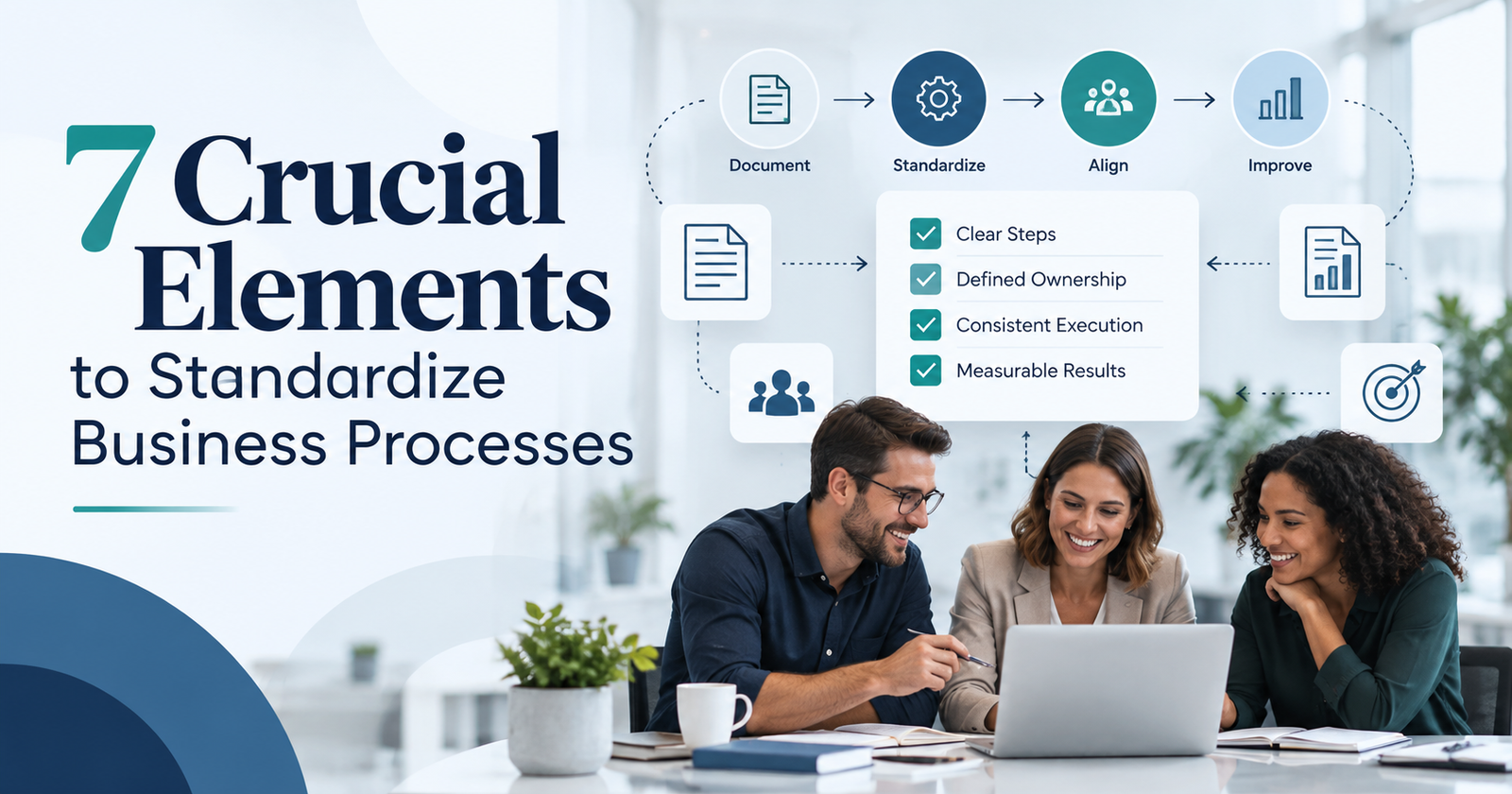
Most small businesses don’t set out to create messy processes. Things develop as the business grows. Someone finds a faster way to complete a task, another person creates a spreadsheet to keep track of things, and the owner becomes the person everyone goes to when they aren’t sure what happens next.
At first, this flexibility can be useful. But over time, it can make everyday work harder than it needs to be.
A task gets completed differently depending on who’s handling it. Important details are missed. New employees rely on colleagues to explain things that should already be documented. And when someone is away, work can come to a standstill.
Learning how to standardize business processes isn’t about making every task rigid or turning your company into a rule-driven organization. It’s about giving people a shared understanding of how important work gets done, while leaving room for judgment when circumstances call for it.
Here are seven elements worth getting right.
1. Define What the Process Is Supposed to Achieve
Before documenting a process, be clear about why it exists.
What needs to happen? Who benefits from it? What should the final result look like?
Without that clarity, businesses can end up documenting a series of steps simply because that’s how someone has always done the work.
Take client onboarding as an example. The goal isn’t just to send a welcome email, collect information, and schedule a meeting. It’s to make sure every new client has the information, access, and support they need to get started.
That distinction helps you identify which steps are essential and which ones may be unnecessary.
Try this: Write one sentence describing the intended outcome of each process before documenting the steps.

A process can be well designed and still fall apart when nobody knows who’s responsible for moving it forward.
Every standardized process needs clear ownership. That doesn’t mean one person has to complete every task. It means someone should be accountable for making sure the process works as intended.
For example, when a new client signs a contract, who triggers onboarding? Who creates the project? Who confirms that the client has submitted the required information?
If the answer to every question is “someone on the team,” there’s room for confusion.
Clear ownership reduces the need for repeated follow-ups and makes it easier to identify where a task has stalled.
3. Document the Steps People Actually Follow
One of the biggest mistakes in process documentation is describing how work should happen without understanding how it happens today.
Before creating instructions, talk to the people doing the work. They often know about exceptions, workarounds, and practical details that aren’t visible from a management perspective.
When considering how to document processes in a small business, start with a process your team performs regularly. Map out each step, from the initial trigger to the final outcome.
For instance, an expense reimbursement process might include submitting a request, attaching receipts, obtaining approval, recording the expense, and confirming payment. Keep the instructions straightforward. A person unfamiliar with the task should be able to follow them without relying on a colleague to fill in the gaps.
The documentation doesn’t need to be lengthy. It needs to be useful.

4. Establish Consistent Standards
Standardization works best when people understand what must remain consistent and where they can use their own judgment.
For some processes, the requirements may be strict. Payroll information, employee records, and financial approvals need clear rules and appropriate safeguards.
For others, the standard may focus on the expected outcome rather than every individual action.
Consider client communication. Your team might agree that every client receives an update at a particular stage of a project, but employees can tailor the wording to the situation.
The important thing is to establish a shared baseline.
Without it, each person creates their own version of the process, and the business gradually returns to the inconsistency it was trying to solve.
5. Make the Documentation Easy to Find and Use
Creating a process document is only half the job. People also need to know where it lives and when to use it.
If instructions are scattered across emails, shared drives, chat messages, and personal notes, employees may struggle to find the right information. They may end up asking someone instead, even when the answer already exists.
As you create process documentation for employees, give your team one clear place to find current procedures.
Depending on the business, this could be a shared folder, an internal knowledge base, or a project management platform. Use descriptive titles, simple formatting, and clear instructions. Where useful, include screenshots, templates, or links to the tools employees need.
A document that nobody can find isn’t doing much to support the business.
6. Build in Checks for Quality and Accountability
A standardized process should help people complete work consistently, but it should also make it easier to catch mistakes.
Think about where errors are most likely to occur and what kind of review would prevent them.
For example, a client proposal process might require a final check of pricing, scope, deliverables, and payment terms before the document goes out. A hiring process might include a review to confirm that required paperwork has been completed.
Not every task needs an approval stage. Adding unnecessary checks can slow work down just as easily as unclear processes can.
Focus on the points where an error would create meaningful consequences. The aim is to build quality into the process rather than depend entirely on someone noticing a mistake afterward.
7. Review, Update, and Improve the Process
A documented process reflects how your business works at a particular point in time. As your team, tools, and services change, those instructions may need to change too.
Without regular reviews, employees can end up following outdated guidance or creating their own workarounds.
Set a review schedule for important processes, and give employees a straightforward way to flag something that no longer makes sense. You don’t need to review every document every month. Start with processes that affect customers, finances, compliance, or several team members.
It’s also worth asking whether a process is still necessary at all. Sometimes the best improvement is removing a step that no longer serves a purpose.
A useful question to ask your team: What’s one recurring task that takes more effort than it should?
Their answers can help you decide where to focus next.
A Small Business Process Documentation Checklist
If you’re ready to put these ideas into practice, use this checklist to review a process before rolling it out.
The purpose and expected outcome are clear.
One person is accountable for the process.
The steps reflect how the work should actually happen.
Responsibilities and approval points are defined.
Required tools, templates, and resources are included.
The instructions are stored somewhere accessible.
The process has been tested by someone who wasn’t involved in writing it.
There is a plan for reviewing and updating the documentation.
This small business process documentation checklist can help you start with one process, test what works, and build from there rather than trying to document everything at once.

Final Thoughts
Standardizing business processes doesn’t mean removing flexibility or expecting every day to go exactly as planned. It means giving your team a reliable starting point.
When people know how work should move, who is responsible, and where to find the information they need, fewer tasks depend on memory or constant supervision. That creates more consistency for customers, less frustration for employees, and more room for business owners to focus on the bigger picture.
Start small. Choose one process that regularly creates confusion, document it, and ask the people who use it whether the new approach makes their work easier. Then build on what you learn.
If your business has grown beyond the informal systems that once worked, Wise Mind Ventures can help you identify operational gaps and build practical processes that support the way your team works. Explore our Services or take the Business Health Assessment to identify where better systems could make a difference.